

Hair loss
CONCERNS
Hair loss and thinning are far more common across all ages and genders than most people realise and they have more different causes than almost any other concern we see. Whether you're noticing gradual thinning, a widening part, or more sudden shedding, working out why comes first, because the cause determines what may help.
DUBBO • MUDGEE • GUNNEDAH • WALGETT • COBAR • FORBES • DUBBO • MUDGEE • GUNNEDAH • WALGETT • COBAR • FORBES •
What causes hair loss and thinning?
Hair loss usually develops from one or more of the following:
Genetics:
The most common cause of gradual, patterned thinning.
Hormonal changes:
Postpartum, menopause and thyroid changes.
Stress and illness:
Can trigger sudden shedding months later.
Nutritional deficiency:
Low iron, zinc or protein affect hair growth.
Medications and conditions:
Some medicines and health issues cause shedding.
Styling and traction:
Tight styles and heat damage weaken hair over time.
Understanding hair loss
Not all hair loss is the same, and the type matters enormously because each has a different cause and a different path forward.
Pattern hair loss (androgenetic alopecia) is the most common type in both men and women. It's genetic and hormonal, develops gradually, and shows as a receding hairline or thinning crown in men, and a widening part or overall thinning in women. It's progressive without intervention.
Shedding (telogen effluvium) is sudden, diffuse hair loss that typically starts two to three months after a trigger - childbirth, illness, surgery, significant stress, crash dieting or a new medication. It's usually temporary and often resolves once the trigger passes, but it can be alarming while it's happening.
Patchy hair loss (alopecia areata) is an autoimmune condition causing round, smooth bald patches. It needs medical assessment and is managed by a GP or dermatologist rather than a cosmetic clinic.
Traction and breakage comes from tight hairstyles, extensions or heat and chemical damage, and shows as thinning at the hairline and temples or hair that breaks rather than sheds from the root.
Because some hair loss signals an underlying issue - thyroid problems, iron deficiency, hormonal conditions, a GP visit and blood tests are often the right first step, and we'll recommend them where appropriate. Our treatments may be suitable for some types of hair loss, and can work alongside medical care.
Areas we can help with
gradual hair thinning
Hair that's slowly become finer and less full.
Gradual thinning is most often pattern hair loss - genetic and hormonal, and progressive over years. Individual hairs become finer and shorter with each growth cycle, and the scalp gradually becomes more visible. It affects both men and women, though the pattern differs, and it's the type most people are describing when they say their hair "isn't what it used to be."
hairline thinning
A widening part or receding temples.
A widening part is the classic sign of pattern hair loss in women, while a receding hairline and thinning temples are more typical in men. Thinning at the hairline can also come from traction - tight ponytails, braids or extensions pulling on the follicles over time. Where the thinning is helps identify the cause.
reduced hair density
Less hair overall, with more scalp showing through.
Density is the number of hairs per area of scalp. It can reduce through pattern hair loss, prolonged shedding, or nutritional and hormonal factors. It's often most noticeable at the crown and when hair is wet or pulled back, and is one of the things assessed at consultation to help identify the type of hair loss.
postpartum & hormonal changes
Shedding after childbirth, menopause or hormonal shifts.
Postpartum shedding typically begins two to four months after birth, as hairs held in the growth phase by pregnancy hormones are released at once. It's usually temporary. Menopause and thyroid changes can also thin hair, sometimes more persistently. Hormonal hair loss is assessed alongside a full history, and blood tests through your GP may be recommended.
What to expect at your consultation
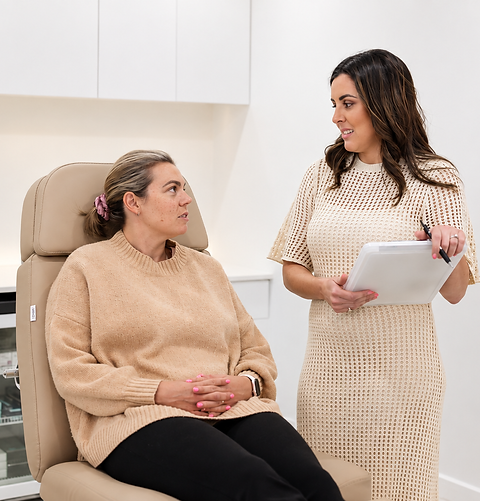
A hair loss consultation begins with identifying what type of hair loss you have, because pattern thinning, sudden shedding and patchy loss each have different causes and different paths forward. Your nurse will take a full medical history including any recent illness, stress, pregnancy, medications, diet changes and family history and assess your scalp and hair, looking at where the thinning is and how the hair is behaving.
If your history suggests an underlying cause, we'll recommend you see your GP for blood tests first, as some hair loss is best addressed medically. From there, we'll create a personalised plan tailored to you, which may include in-clinic treatment, referral, or both.
Under Australian advertising guidelines (TGA), we're unable to discuss specific treatments on our website, so options and costs are always discussed in person.
Treatments we offer for hair loss
At W.D.I Clinic, a selection of professional scalp treatments may be considered as part of a comprehensive approach to hair thinning. Suitability is always determined during a required consultation. All cosmetic procedures carry risks, and results vary between individuals.
Frequently asked questions
What are the most common causes of hair loss?
+
Genetics is the most common, but hormonal changes, stress, illness, nutrition, medications and age all play a part. A consultation helps identify what's contributing to yours.
What's the difference between hair loss and hair shedding?
+
Shedding is a sudden increase in hairs falling out, usually two to three months after a trigger like illness, childbirth or stress, and is often temporary. Hair loss in the sense of thinning is usually gradual and progressive, most often genetic. They're approached differently.
Should I see a GP or get blood tests first?
+
Often, yes. Hair loss can signal thyroid problems, iron deficiency or hormonal conditions, and blood tests through your GP can identify these. If your history suggests an underlying cause, your nurse will recommend this before or alongside any treatment.
Is hair loss treatment suitable for men and women?
+
Yes, hair thinning affects all genders, and treatment suitability is assessed individually at your consultation.
How many sessions will I need?
+
Hair treatments are usually done as a course. Your nurse will outline a plan tailored to you.
How long before I notice any change?
+
Hair grows slowly and in cycles, so any change from any approach takes several months to become visible. Your nurse will explain what to expect at your consultation.
Does W·D·I Clinic offer fine lines and wrinkles consultations near me?
+
W·D·I Clinic is based in Dubbo and regularly travels to locations across Western NSW. Visit our Locations page to see upcoming clinic dates and find the nearest location to you.
What causes hair loss and thinning?
Hair loss usually develops from one or more of the following:
-
Genetics: The most common cause of gradual, patterned thinning.
-
Hormonal changes: Postpartum, menopause and thyroid changes.
-
Stress and illness: Can trigger sudden shedding months later.
-
Nutritional deficiency: Low iron, zinc or protein affect hair growth.
-
Medications and conditions: Some medicines and health issues cause shedding.
-
Styling and traction: Tight styles and heat damage weaken hair over time.